Right now, I’m reading Leviticus. It’s a difficult book, about sacrifices, being unclean, impure blood flows, and so on. How does that have to do with our modern lives, and with our lives as a Christian?
Of course, it goes back to a different time and a different culture. It was before Jesus, who revolutionised the way we could come to God. At the same time all Scripture is God-breathed and is useful for teaching, rebuking, correcting and training in righteousness (2 Timothy 3:16). So this is too. We just need to search a little more!
I prayed as I was reading today, and that helped open my eyes to what God could be saying to me through Leviticus 13 and 14. This is about how people with infectious skin diseases that spread are unclean, and how objects with moulds that spread are unclean. These are hard passages. Does God reject people with skin diseases? By no means! They go the priest many times to be examined, and as soon as they are clean again, they are welcomed back into the camp. It’s very likely God wanted to protect the rest of his people from getting infected. It’s likely the issue with moulds was similar – they could spread and infect other objects and affect people’s health. God wanted His people to be healthy and reflect the wholeness that He has. He also wanted and wants His people to be holy. Holiness is a very important priority with God.
In that sense, this passage still speaks to us today. Moulds spread. Infections spread. If they are strong infections, we may be powerless to stop them, like someone infected from a skin disease from head to toe. Sin is like that. It spreads and we cannot stop it in our own power. It infects our whole lives. In those days, people could be outwardly cleansed and be outwardly clean before God. However, their deeper issue, their inner sin, could never really be fixed through sacrifices.
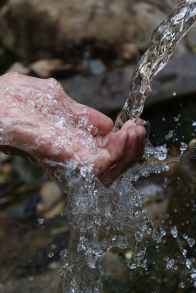
In the Old Testament, the focus on holiness was largely outward. People needed to be clean from anything that spoke of death, as God was life (see video on holiness from the Bible Project.) For instance, when they touched unclean bodies, and when they experienced blood flows, they needed to go through rituals to cleanse themselves afterwards. This cleanliness was needed to be closer to God. Still, no one could approach God directly. This was an outward cleanliness that spoke of a strong need for a deeper, inner cleanliness. Yet that inner cleanliness was not yet available.
As Hebrews 9:10-11 states, “the gifts and sacrifices being offered were not able to clear the conscience of the worshiper” and “appl[ied] only until the time of the new order”. They could only make people outwardly clean: “The blood of goats and bulls and the ashes of a heifer sprinkled on those who are ceremonially unclean sanctify them so that they are outwardly clean” (Hebrews 14:9a). Jesus can do much more: “How much more, then, will the blood of Christ, who through the eternal Spirit offered himself unblemished to God, cleanse our consciences from acts that lead to death, so that we may serve the living God!” (Hebrews 14:9b). Now we can be cleansed from not only physical and outward associations to death, but also from our inner tendency toward death, from acts that lead to death.
At a later point in the Old Testament, Naaman, a foreigner, is suffering from leprosy (2 Kings 5). He is not part of God’s holy people, the Israelites. But when Elisha tells him to bathe in the Jordan seven times, he is healed. He is baptised and cleansed from his sin, from his festering disease that just never stopped spreading, that he was hopeless to stop. God healed him and opened his kingdom to a foreigner. This spoke of what God was to do later on. He would open His kingdom to all people, purifying them through the baptism Jesus gives us. Baptism is a picture or symbol of how we share in Jesus’ death to sin, and rise in His life, conquering sin. Jesus can make us completely whole and free us powerfully from sin. He then calls us to live holy lives through His power.
The focus on holiness has never changed, but now God gives us the power to live holy lives, and to live those from the inside out.
 Deeper